Twenty-five years ago …
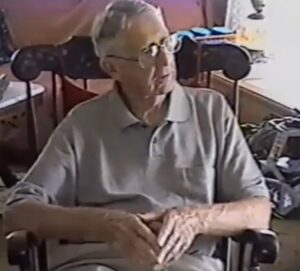
…high school history teacher Matthew Rozell interviewed WWII veteran Carrol “Red” Walsh. As the interview was ending, Walsh’s daughter asked “Did you happen to mention the train?”
He had not. But once urged to tell the story, Walsh revealed an all-but-forgotten encounter that occurred on April 13, 1945…
Walsh had been a tank commander in the 743rd Battalion in central Germany. And in April they were on their way to take the ancient city of Magdeburg. But along the way, they discovered an abandoned train, fifty boxcars long, in which 2,500 concentration camp prisoners had been trapped for six days.
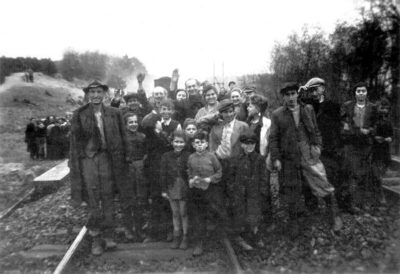
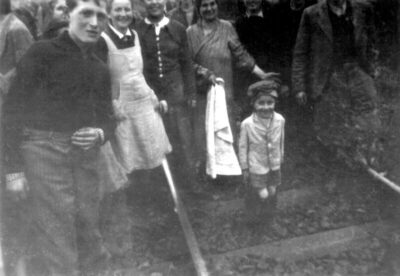
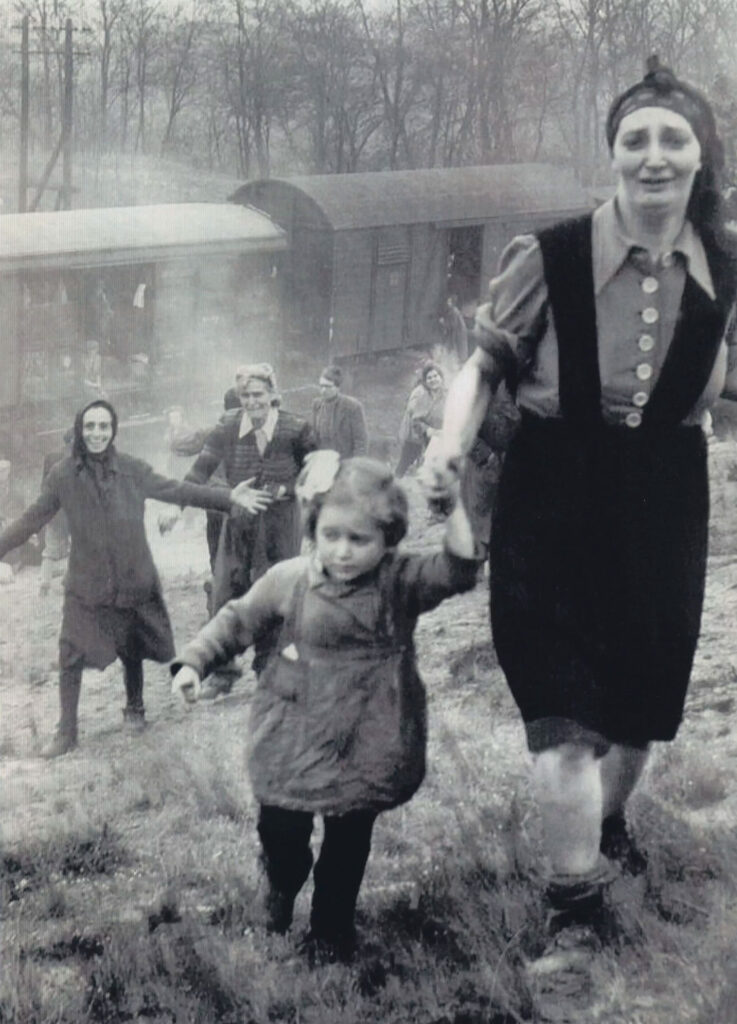 Once the surviving people from the train saw the soldiers, many of them rushed to greet their saviors.
Battalion commander Major Clarence Benjamin raised his camera and captured the moment. The resulting photo has since come to be called “one of the most powerful photos taken in the 20th Century.”
The soldiers soon learned that these people, most of them Jews, were from all over Europe. And they had been imprisoned at the Bergen-Belsen concentration camp, where many of them had been told they would eventually be released, traded for German prisoners. But conditions had changed, and the Commandant there had decided to ship his “exchange prisoners” out of the camp — to Theresienstadt, where they could be quickly put to death.
But after days and days of slow travel, the German soldiers guarding the train heard the approach of the U.S. Army, and fled — leaving the train and its starving people to die.
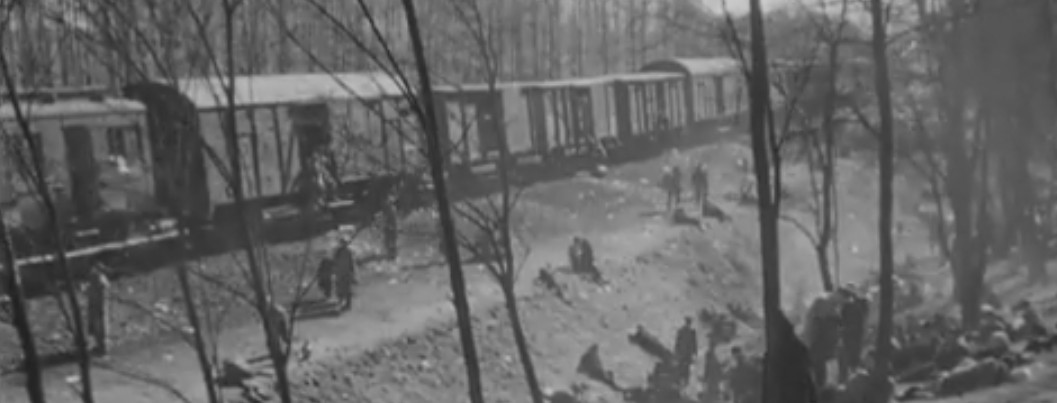
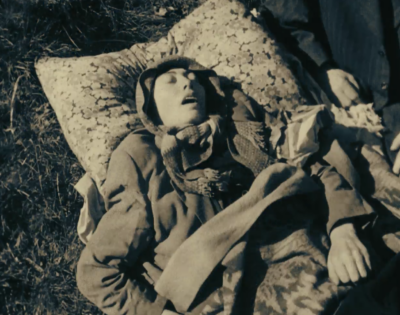
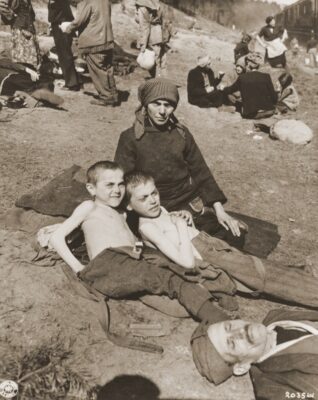 The soldiers were eager to help … but were in no way equipped to feed 2,500 starving people, much less treat the diseases which the nightmarish imprisonment had spread.
 I don’t want to give away too many details about what happened next!
But these soldiers found ways to get food, shelter, and medical aid to these people.
Despite the bombs exploding around them —
Despite their being in enemy territory with a war to win —
These U.S. Army soldiers worked night and day to save as many of these people’s lives as they could.
And that is by no means the end of the story. The things that happened as a result of this “chance meeting” are just as amazing…!
Ten years ago …
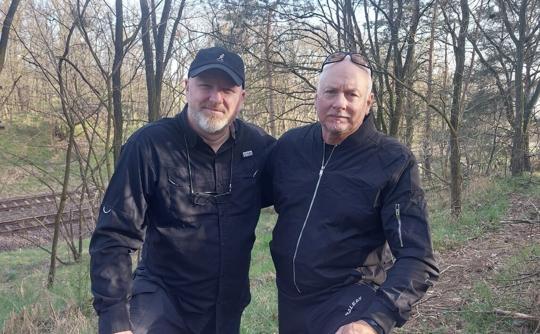
… I learned about the liberation of the people from the train, and of the extraordinary things that have happened since. It seemed to me this story cried out to be a movie or a television miniseries.
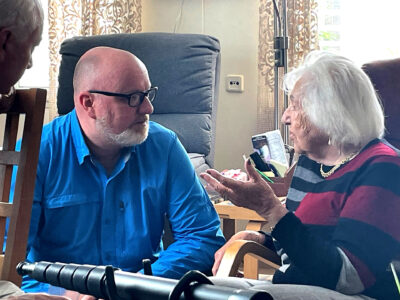
I sought out Matthew Rozell, who by then had written the best-selling A Train Near Magdeburg, in which he told how he had organized reunions of the liberators and the liberated — giving people whose lives were spared a chance, after decades, to thank their saviors face-to-face. In the process, Rozell had met and become friends with many of the veterans and the survivors — and could now bring even more people connected to the story into bringing the “train saga” to the screen.
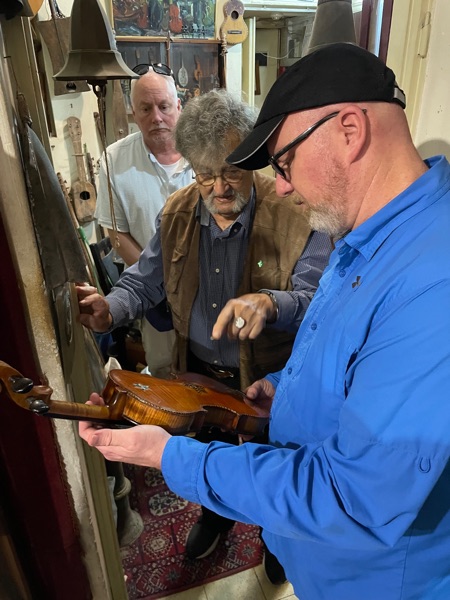
Since then this project has taken us all over the United States, to Germany, to Israel, to England, to the Netherlands … and we have met and interviewed survivors, daughters and sons of liberators, historians, artists … it’s been a whirlwind.
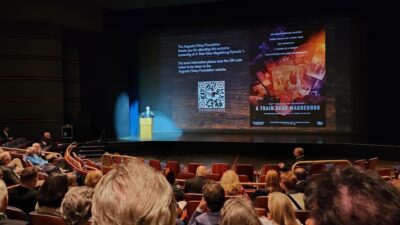

And as we refine the work, it continues to attract more exceptional talent. The music in the film, written by the extraordinary Jim Papoulis, now features performances by the world-famous Grammy-winning violinist Joshua Bell, the Ambassadors of Harmony chorus, and the Columbus Symphony Orchestra.

And now the internationally acclaimed actor Sir David Suchet has eagerly joined the team as our narrator — and one of our most enthusiastic supporters. At the recording session in London he said being a part of this film marked a highlight in his 57-year career. “And,” he added, “that is not an exaggeration.”
Our resources now include organizations and historians too numerous to mention. Their response has been overwhelmingly enthusiastic, with each one echoing the sentiment: “This story needs to be told.”
 Our original plan was to present our film as a miniseries to be seen on streaming services. And in 2025, via our partnership with ITV Studios, we presented our work to a major international streamer (a name you would know!) … but in the end, we decided to step back and reconsider. We took a thoughtful pause to ensure we’re presenting this story with the care and impact it deserves.
 I took a “long hard look in the mirror” …and with the consultation of the Board of the Augusta Chiwy Foundation, my team and I agreed to take a bold step and attempt to raise the sponsorship money to bring a theatrical version of the documentary to the big screen!
The plan is to start with the top 100 movie markets in America, later expanding to 800-1000 theaters.
For one thing, this will allow us to freely couple education events with the film’s release into theaters to create dialogue and educate young people about the messages that this story brings. We’ve been developing curriculum to accompany the film and we want to create the best opportunities for using that.
After our theatrical run in the U.S. there can be international theatrical distribution — and we can then go back to the global television and streaming markets. We can even produce additional episodes — the story is just so rich.
 We have the right team of industry experts in order to help us do all this, we have formidable national marketing partners (again, names you would know), but raising the funds for a theatrical release is an extremely ambitious task.
Yet, despite the challenges, I feel with all my heart that people across America need to have the chance go to the theaters and experience this story.
This story shows mankind at its worst — and its best. It shows moral courage demonstrated by the United States Army during Word War II.
It shows the power of love.
I made a promise to the liberators and the survivors that we will not quit until we get this done.
There have been many ups and downs….highs and lows…and days that have been full of pure joy, and days that I have wanted to quit.
But we have kept walking. Believing in the power of this story.
Ever onward!